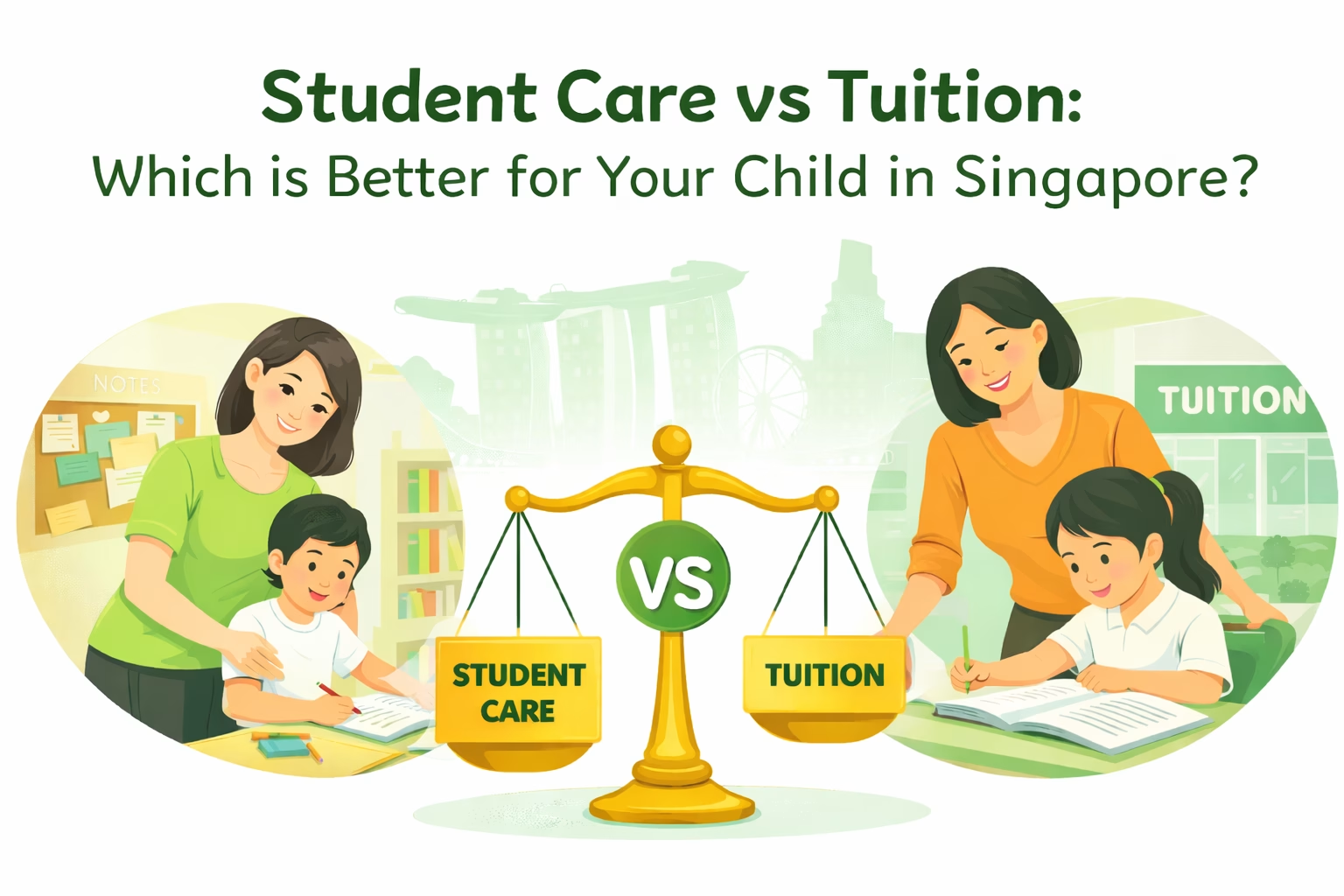
Many parents in Singapore face the same question:
Should I send my child to student care or tuition?
Both options seem helpful — but they serve very different purposes.
Choosing the right one depends not just on academic needs,
but on how your child learns, grows, and adapts after school.
In this article, we break down the key differences — and help you decide what truly benefits your child in the long run.
- What is Student Care?
Student care provides structured after-school support for primary school children.
It typically includes:
- Homework supervision
- Daily routines and structure
- Social interaction with peers
- Guidance from teachers or mentors
However, not all student care centers are the same.
Some focus mainly on supervision,
while others provide a more holistic environment that supports thinking, emotional development, and life skills.
- What is Tuition?
Tuition is focused on academic improvement in specific subjects.
It usually involves:
- Subject-based lessons (Math, English, Science)
- Exam preparation
- Practice and revision
Tuition is often used when:
- A child is struggling in a subject
- Parents want to improve grades
- There is a need for targeted academic support
- Key Differences Between Student Care and Tuition
a.Daily Experience vs Short Sessions
a.Daily Experience vs Short Sessions
Student care is part of a child’s daily routine.
Tuition usually happens once or twice a week.
 This means student care has a much greater influence on a child’s habits, mindset, and behavior.
b.Whole Development vs Academic Focus
Student care (when done well) supports:
- Emotional development
- Social interaction
- Independence
- Communication
Tuition focuses mainly on:
- Academic performance
- Subject mastery
c.Environment vs Outcome
Tuition focuses on results.
Student care shapes the environment where children grow every day.
And over time, environment has a powerful impact on a child’s confidence, behavior, and attitude towards learning.
- Which One Does Your Child Actually Need?
This depends on your child’s situation.
Choose Tuition if:
- Your child needs help in specific subjects
- Exam performance is the main concern
Choose Student Care if:
- You want daily structure and guidance
- Your child needs support beyond academics
- You want them to build confidence, independence, and social skills
- Why More Parents Are Rethinking Student Care
Traditionally, student care was seen as:
A place for supervision and homework
But today, more parents are looking for something more:
- Emotional support
- Life skills development
- A positive daily environment
This shift is changing what “good student care” means.
- A More Holistic Approach to After-School Care
At Sapling Grove, we believe after-school time should be meaningful — not just managed.
Our approach goes beyond homework.
Through our Saplorer Program™, children develop:
- Awareness (Sense)
- Thinking (Think)
- Action (Act)
- Expression (Express)
We also place strong emphasis on emotional development through:
- Our Mind Steps program
- Monthly Art Therapy sessions
- Guidance from a child emotional wellness consultant
- A dedicated Calm Corner
This helps children not just perform better —
but feel more confident, balanced, and capable over time.
- Can Student Care and Tuition Work Together?
Yes — and in many cases, they should.
Student care provides the daily environment and foundation.
Tuition can be added when there is a specific academic need.
The key is balance.
A child who is emotionally stable and confident
is more likely to benefit from tuition as well.
There is no one-size-fits-all answer.
But one thing is clear:
Tuition improves results
Student care shapes development
And in the long run, development determines how a child learns, adapts, and grows.
If you are exploring student care options in Singapore,
we invite you to visit Sapling Grove and see how a different approach can support your child’s growth.